

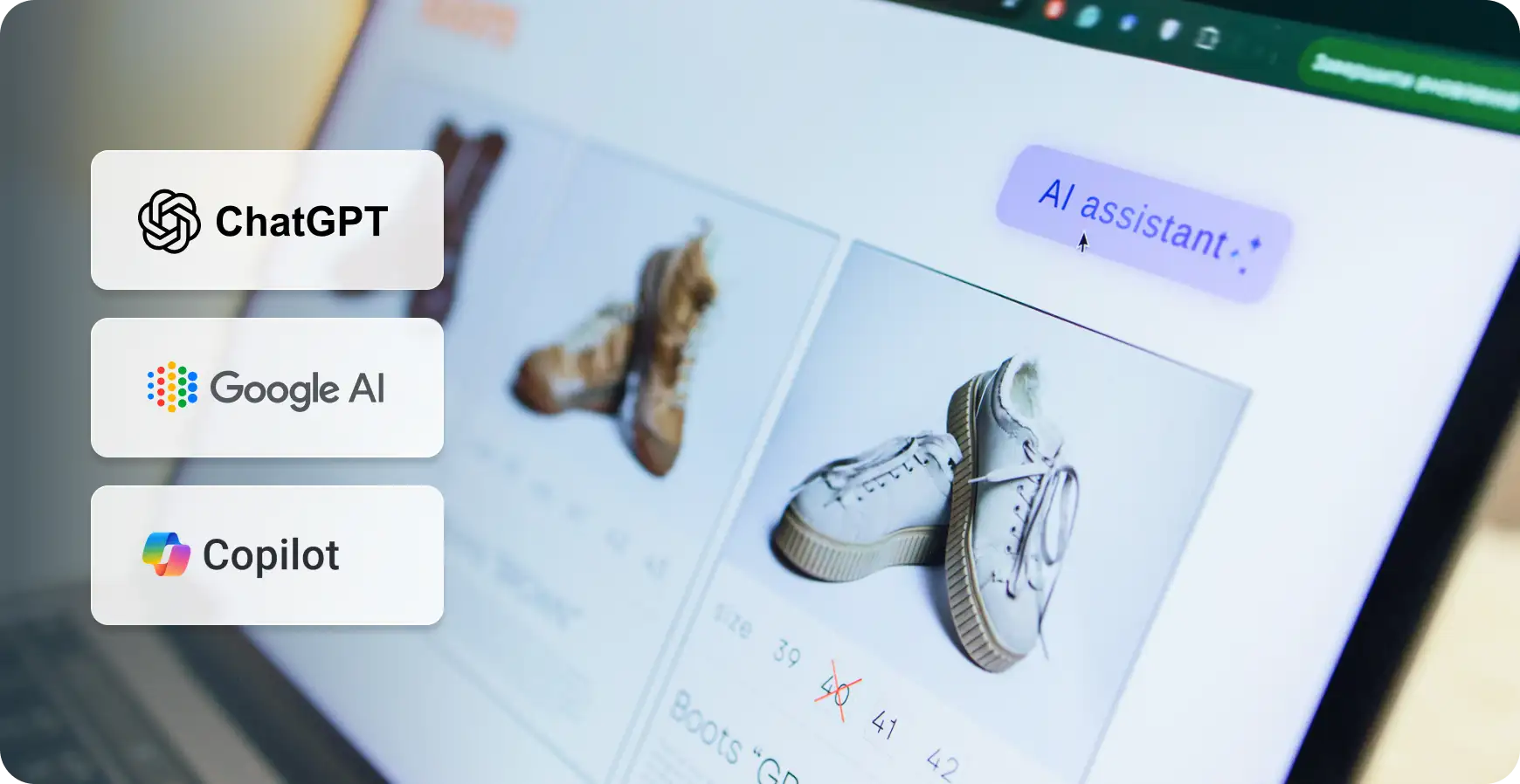
How to Get Your Products Discovered in ChatGPT, Google AI Mode and Microsoft Copilot
NOVEMBER 23, 2026Imagine a customer looking for a new coffee machine.
Instead of searching Google for “best coffee machines”, they ask ChatGPT: “What’s the best automatic coffee machine under $1,000 for someone who loves a flat white, has limited bench space and doesn’t want to spend 20 minutes cleaning it?”
That’s a very different shopping journey.
The customer isn’t simply looking for a product category. They’re describing their needs, comparing options and asking for a recommendation.
And increasingly, AI-powered shopping tools are helping them narrow down those choices.
For retailers, this raises an important question: If your products aren’t appearing in those recommendations, how do you make sure you’re not missing out?
The answer starts with something many retailers already use: product feeds – but there’s a little more to it than simply uploading your catalogue.
AI shopping is changing how customers discover products
Traditional product searches often start with a keyword.
AI-powered shopping allows customers to be much more specific.
Think:
- “Find me a lightweight carry-on suitcase that fits Australian domestic airline requirements.”
- “What’s a good skincare routine for sensitive skin using fragrance-free products?”
- “Compare three cordless vacuums suitable for pet hair, under $600.”
- “I need a birthday gift for a seven-year-old who loves dinosaurs and building things.”
These questions reveal much more about what the customer actually wants.
AI shopping tools can use that information to find relevant products, compare features and help customers make a decision.
That creates an opportunity for retailers whose products genuinely meet those needs, but it also means product information needs to do more work.
A vague product title, incomplete description or missing attribute could make it harder for an AI shopping system to understand why your product is relevant.
The opportunity isn’t simply to be found – it’s to be found by the right customer, for the right reason.
How do products appear in ChatGPT, Google AI Mode and Copilot?
While all three platforms support AI-powered product discovery, they don’t work in exactly the same way.
1. ChatGPT: Product discovery through conversation
ChatGPT can help customers research products, compare options and refine recommendations based on their preferences.
For example, a shopper might start by asking for running shoes, then narrow their requirements to a particular budget, foot type, running surface or brand.
To support these shopping experiences, OpenAI uses product information from merchant feeds, third-party providers and other sources.
These feeds can include product titles, descriptions, images, pricing, availability and other relevant attributes.
What retailers should know:
- Shopify merchants already have a head start. Shopify Catalog integrates product information with ChatGPT, meaning merchants don’t need to set up a separate direct feed for basic product discovery. However, Shopify manages how that catalogue information is shared, so merchants have less direct control over individual feed fields.
- Direct product feeds offer greater control. OpenAI also supports structured merchant feeds, allowing retailers to provide detailed product information, including attributes, images, pricing and availability. Access and onboarding requirements vary.
- Shopping in ChatGPT is available on web and mobile. However, some merchant integrations and purchasing features have separate regional and eligibility requirements.
- Discovery doesn’t guarantee visibility or a sale. ChatGPT determines which products are relevant to a customer’s request, and purchases may be completed through the retailer’s own website.
For Australian retailers, the opportunity is to get their product information in order now, understand the available integration pathways and prepare for AI-powered product discovery as these experiences continue to evolve. You can review the latest requirements through OpenAI’s merchant information.
2. Google AI Mode: Your existing product feed matters
Google is incorporating AI-powered experiences into how people search for and compare products.
A shopper can ask a detailed question, explore recommendations and continue refining their search.
For retailers, Google Merchant Center remains an important foundation for providing accurate product information. That means the quality of your existing Google Shopping feed matters.
What retailers should know:
- Product titles, descriptions, images, pricing and availability should be accurate and complete.
- Product attributes help Google understand which items match more specific customer requirements.
- Your website still needs to be accessible, indexable and supported by good SEO practices.
- Google is introducing more detailed AI performance reporting through Merchant Center to help retailers understand how their products appear in conversational shopping searches.
If you’re already using Google Shopping, you may have much of the infrastructure in place.
The next step is making sure the information you’re supplying is detailed, accurate and useful.
Read more about Google’s AI search guidance.
3. Microsoft Copilot: Product data helps power recommendations
Microsoft Copilot is also developing shopping experiences that help customers discover, compare and purchase products.
Microsoft uses information from the web and Microsoft Merchant Center to support product recommendations.
Like Google, Microsoft places considerable emphasis on accurate, structured product information.
What retailers should know:
- Microsoft Merchant Center is an important pathway for supplying product information.
- Complete product attributes and current pricing and availability help improve product understanding.
- Retailers should review their feed quality and the eligibility requirements for relevant shopping features.
- Copilot Checkout and other purchasing capabilities have separate participation and regional requirements.
Microsoft’s agentic commerce guidance outlines the role of product feeds in these experiences.
The common thread? Better product data.
Here’s where things get interesting – the platforms may be different, but they share a fundamental requirement: They need to understand what you’re selling.
And the more complete and accurate your product information is, the better equipped these systems are to match it with relevant customer needs.
Let’s take a simple example – a clothing retailer lists a product as: “Women’s Linen Shirt – White”
That’s a perfectly reasonable starting point, but imagine the customer asks: “Find me a breathable, relaxed-fit linen shirt for summer that’s easy to wash and available in a size 12.”
A more useful product listing would include:
“Women’s 100% Linen Relaxed-Fit Shirt – White”
With supporting attributes covering:
- Material: 100% linen
- Fit: Relaxed
- Colour: White
- Available sizes: 8–18
- Care instructions: Machine washable
- Current price and stock availability
Now there’s much more information available to establish whether the product meets the customer’s requirements.
The same principle applies whether you’re selling fashion, electronics, homewares, sporting goods or automotive accessories.
It’s not about stuffing more keywords into your listings. It’s about giving customers – and the systems helping them shop – the information they actually need.
Five things retailers can do now to improve AI product discoverability
You don’t need to rebuild your ecommerce operation to start preparing for AI shopping.
In fact, many of the most valuable improvements are things retailers should already be doing.
1. Give your product titles and descriptions a proper review
Start with your best-selling products.
Are your titles specific enough? Do your descriptions explain the features, materials, dimensions and benefits that matter to customers?
Think about the questions a customer might ask before buying. If those answers aren’t in your product information, you’ve found an opportunity to improve it.
2. Fill the gaps in your product attributes
Depending on your category, attributes such as colour, size, material, compatibility, capacity, dimensions and product identifiers can be important.
Missing or inconsistent attributes can make it harder to match products to detailed shopping queries.
And remember, requirements vary between platforms – the information needed for a fashion marketplace won’t necessarily be the same as the information needed for an electronics retailer.
3. Keep pricing and inventory accurate
There’s little value in recommending a product that isn’t available, or displaying a price that doesn’t match the retailer’s website.
Accurate inventory and pricing have always mattered in ecommerce.
They’re just as important when products are being discovered through AI. Make sure your product information stays synchronised with the systems that manage your stock and pricing.
4. Check where your product data is coming from
This is particularly important for retailers operating across multiple systems.
Your ecommerce platform might hold your product descriptions, while your ERP manages inventory and your PIM stores detailed product attributes.
Or perhaps Shopify is only one part of your wider ecommerce operation. Before adding new discovery channels, understand which system holds the most reliable information for each product field.
Otherwise, adding more destinations can simply create more places for inconsistent information to appear.
5. Review the feeds you’re already using
You may already be supplying product information to Google Shopping, marketplaces or affiliate channels.
That’s a good place to start.
Check whether those feeds are current, whether products are being rejected and whether important attributes are missing.
Also review which additional channels are actually supported and what their participation requirements are.
One important point: a well-structured product feed improves your readiness, but it doesn’t guarantee your products will appear in AI recommendations. Each platform determines its own eligibility, relevance and ranking.
So what if you’re selling across multiple marketplaces and platforms?
For smaller retailers, managing one product catalogue can be relatively straightforward, but complexity grows quickly.
Imagine you’re selling through Shopify, Google Shopping, Amazon, eBay and several Australian marketplaces. Now add emerging AI shopping destinations.
Each channel may have different product information requirements, listing rules and integration methods.
And you still need to keep inventory, pricing and product information accurate.
Managing each destination separately can create unnecessary work, particularly if your catalogue contains thousands of products or your data comes from multiple systems.
This is where a more connected approach to product feeds becomes valuable.
Instead of treating every new sales or discovery channel as another standalone project, retailers can focus on maintaining reliable product information and adapting it for the destinations they want to reach.
That doesn’t mean every platform uses the same feed or offers the same integrations.
It means having a stronger foundation makes it easier to evaluate and support new opportunities as they become available.
Your AI shopping readiness checklist
Not sure where to start? Work through these seven questions.
- Are our product titles and descriptions specific, accurate and useful?
- Have we completed the important attributes for our product categories?
- Are our prices and stock levels consistently up to date?
- Do our product pages provide useful information and remain accessible to search engines?
- Do we know which systems are responsible for our product, pricing and inventory data?
- Have we checked our existing shopping feeds for errors, missing attributes and rejected products?
- Do we understand which AI shopping platforms currently support our products, markets and integration methods?
If you can’t confidently answer yes to all seven, that’s your starting point – but remember, you don’t need to solve everything at once.
Start with the products that matter most to your business, identify the gaps and work through them systematically.
How can retailers measure whether AI shopping is working?
In our experience, this is an area that’s still developing. Traditional ecommerce reporting focuses heavily on traffic sources, clicks and conversions.
AI shopping introduces another consideration: customers may discover and evaluate products within an AI experience before visiting a retailer’s website.
A few useful places to start that we have researched for you:
- Google Merchant Center: Review product eligibility, feed diagnostics and AI performance insights where available.
- Google Search Console: Monitor search visibility and performance. Google’s AI search features contribute to its broader Search performance reporting.
- Google Analytics: Review referral traffic and conversions from identifiable AI platforms, recognising that not every interaction or recommendation will be visible.
- Microsoft Clarity: Explore AI visibility and referral insights where available.
Don’t forget the fundamentals: Are more qualified customers reaching your products? Are those visits converting? Are your listings accurate and your products available?
Being mentioned by an AI platform might be interesting, but generating profitable sales is what ultimately matters.
Where does Omnivore fit in?
More discovery channels shouldn’t mean more product feed complexity.
As new shopping channels emerge, retailers face a familiar challenge: getting the right product information to the right destination, without creating more manual work.
That’s where Omnivore comes in.
We help retailers connect their existing ecommerce systems with marketplaces and supported product feed destinations, managing the product data, listing requirements, inventory and integrations that keep everything working together.
Whether you’re selling through Shopify, BigCommerce, WooCommerce, Magento or a more complex enterprise setup, the goal is the same: make it easier to manage your product information and reach customers across more channels.
And as AI-powered shopping evolves, we’re exploring new product feed opportunities, including ChatGPT.
Because the next generation of product discovery will still depend on something retailers already know matters: accurate, complete and reliable product information.
The next customer journey might start with a question
AI shopping isn’t replacing every traditional way people discover products. Customers will still visit retailer websites, browse marketplaces, search Google and respond to advertising.
But conversational product discovery is becoming another part of the mix, and for retailers, the preparation doesn’t need to be complicated.
Start with your product data. Make it accurate, complete and useful. Understand where it lives and how it reaches the channels you want to sell through.
Because wherever the next customer starts their search, you want your products to have the best possible opportunity to be considered.
Want to understand whether your product feeds are ready for emerging AI shopping channels?
Talk to the Omnivore team about your current ecommerce setup, product data and the channels you’re looking to reach.
Explore Omnivore’s ecommerce integrations →